
A Concrete Poem in the Wild
Among the World's Outstanding Architecture (104 Selected Works)
Selected for ArchDaily × gestalten's The ArchDaily Guide to Good Architecture,
featured in Braun Publishing's Where Architects Stay Around the World,
and newly selected by the MICHELIN Guide.
From an outstanding work of architecture, to one of 120 architectural stays around the world, to a pilgrimage-worthy destination for devotees of hotel architecture. “The World's Outstanding Architecture” refers to the 104 selected works featured in The ArchDaily Guide to Good Architecture. The Wandering Walls is the only project from Taiwan included in both the ArchDaily × gestalten and Braun Publishing selections.

A Place for Wind, Light, and Sea
Some buildings are made simply to be inhabited. Others invite you to disappear into the forest and rediscover what it feels like to be alive.
Selected for ArchDaily × gestalten's The ArchDaily Guide to Good Architecture , The Wandering Walls is more than a place to stay. It is a sanctuary shaped in coexistence with Hengchun's wild acacia forest.
In 2008, while traveling around the world, Gavin began imagining a place built around his own idea of how life could be lived. After two years of searching, he found a quiet hillside on the northwestern edge of Kenting, overlooking the sea. In 2012, architect Grace Cheung was invited to transform the wild acacia forest and Hengchun's powerful seasonal winds into a work of architecture one could actually inhabit.
At The Wandering Walls, what most guests remember is not a list of features, but a feeling: the angle of morning light across the concrete walls, the silence of a night without the noise of the city, and the first moment they truly hear the wind.
Forest Sound
Leave the noise of the world behind and hear only the seasonal winds moving through the acacia canopy.
Light
Daylight becomes a measure of time, moving from the raw concrete walls to the edge of the bed and quietly reminding you to slow down.
Horizon
Where mountain and sea share the same horizon, choosing to stay becomes a luxury in itself.

Walls in Motion: Letting the Forest Flow Through
To allow the sea breeze to pass through and the shadows of trees to remain within the architecture, XRANGE Architects designed three non-overlapping curved walls, creating what can be understood as Vertical Misalignment. The three walls move independently across different levels, weaving through the floor plates like ribbons. Rather than becoming a barrier, the building creates passages through which the forest and wind can move freely. This distinctive design was also recognized by the Rethinking The Future Awards in the Hospitality category.
Every stay therefore offers a different way of seeing the landscape—not simply another room, but another angle from which to encounter the mountains and sea.

A Texture Sculpted by the Wind
In response to Hengchun's rugged climate, the architect pursued the tactile quality of Lo-Res Curves. The flowing wood-grain texture across the concrete is not accidental. Specially sized timber formwork was carefully assembled to follow each curve. Run your hand across the surface and the building begins to feel less like concrete and more like an immense rock— something that has stood here for years, ready to be weathered by wind and time.
Many guests instinctively reach out to touch the walls. What they feel is not decoration, but a texture shaped by place and time.
Floating at the Treetops
Defying Gravity
The curved walls cantilever as far as 4.5 meters beyond the second- and third-floor slabs. Without ground-level support, these “flying walls” challenge gravity structurally while creating the sensation of floating above a sea of acacia trees, framing the horizon like a moving landscape painting.
Stand at the corner and the wall seems to float, while the landscape appears to hold you in place.
Listening to the Wind
Echo Chamber
The windowless rear wall acts as a protective shell against the wind, while the cantilevered flying wall forms a vertical Echo Chamber. Rather than shutting sound out, it captures and amplifies the rustling of Hengchun's seasonal winds through the acacia leaves, turning the act of listening to the wind into one of The Wandering Walls' most powerful sensory experiences.
Late at night, you begin to realize that even the sound of wind has layers.
Touching the Earth
Tactile Landscape
At ground level, the walls appear to hover above the earth, allowing the red soil of the courtyard to extend naturally toward the interior. Rather than separating architecture from nature, the building allows soil, dust, and the scent of the seasons to become part of the space. This is architecture that remains alive.
It is a building whose expression changes with time—and your stay becomes part of its memory.
Cheung 張 淑 征 Founder / XRANGE Architects
Grace Cheung is not only a contemporary architect, but a pioneering figure whose work has marked a significant moment in Taiwanese architecture.
In 2021, her practice received an AIA International Design Award, becoming the first Taiwanese architectural practice to receive the distinction, with Cheung becoming the first Chinese woman architect to receive the honor.
A graduate of Columbia University's Graduate School of Architecture, Planning and Preservation, Cheung previously worked with Pritzker Prize laureate Rem Koolhaas at OMA, Bernard Tschumi Architects in New York, and Patkau Architects in Canada. Her precise structural sensibility and fluid architectural vision transformed The Wandering Walls into a singular work capable of entering an international architectural dialogue. To experience The Wandering Walls is to experience a chapter in Taiwan's architectural journey onto the world stage.
For the traveler, these credentials are more than a résumé. They are an assurance that the space you inhabit was conceived as a work of architecture—not calculated simply by the number of rooms it could contain.
From the Wild to the World
104 / ArchDaily × gestalten
Selected among 104 works from more than 40,000 architectural projects worldwide; The Wandering Walls is the only project from Taiwan included.
120 / Braun Publishing
Featured among 120 architectural stays in Where Architects Stay Around the World; the only selection from Taiwan.
MICHELIN GUIDE
Newly selected by the MICHELIN Guide in 2026 and described as a pilgrimage-worthy destination for devotees of hotel architecture.
Awards & Media
International architecture awards and editorial features by VOGUE, GQ, ELLE, Home Journal, and more.
First, it was selected as one of the world's outstanding works of architecture.
Then, as architecture worth staying in.
Now, as a place worthy of pilgrimage for devotees of hotel architecture.
104 outstanding works of architecture × 120 architectural stays around the world × newly selected by the MICHELIN Guide.
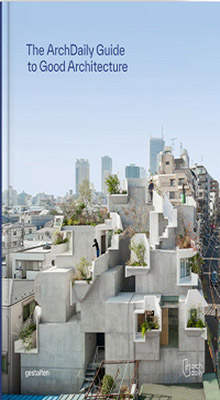
Published jointly by ArchDaily and international publisher gestalten, The ArchDaily Guide to Good Architecture looks back over 15 years and more than 40,000 architectural projects worldwide, ultimately selecting 104 works. The Wandering Walls is the only project from Taiwan among them.
Within its pages, The Wandering Walls appears alongside works by Kazuyo Sejima / SANAA, Alejandro Aravena, and other Pritzker Prize laureates. For us, its inclusion recognizes the architectural language The Wandering Walls has created through exposed concrete flying walls, vertical misalignment, and the distinctive climate and landscape of Hengchun.
Later, Braun Publishing included The Wandering Walls in Where Architects Stay Around the World , a collection of 120 architectural stays around the world. The Wandering Walls is the only property from Taiwan featured in the book. This time, the architecture was not simply chosen to be seen or discussed. It was chosen as a place worth traveling to—and actually inhabiting.
In 2026, The Wandering Walls was seen from yet another perspective: newly selected by the MICHELIN Guide. Unlike the previous recognitions, which approached The Wandering Walls through architecture and architectural travel, the MICHELIN Guide considers what happens when architecture becomes hospitality—when people enter it, stay within it, and experience the building through the act of living there.
From one of the world's outstanding works of architecture, to one of 120 architectural stays around the world, to what the MICHELIN Guide calls “pilgrimage-worthy.” Three international recognitions, each from a different perspective, ultimately point to the same idea: The Wandering Walls is more than a place to stay. It is a place worth traveling to for the architecture itself.
The Wandering Walls has also been featured in Contemporary Architecture: Masterpieces around the World , and has been covered by VOGUE , GQ , ELLE and Home Journal , among others.
But for most guests, what matters more than any list or recognition is much simpler: it is genuinely quiet here, genuinely open, and somehow, it makes you slow down.





Moments of Stillness


Some buildings are like unsigned love letters. They are not designed for anyone in particular, nor are they in any hurry to explain themselves. They simply stand quietly, letting wind pass through their bodies and light dance across their surfaces. There are no words here, yet everything has a voice.
Wind becomes a curve. Light becomes tone. Water becomes breath. A bend in a wall, a trace of light, a pool of water— each is a sentence written by time.
As we grow older, we become less drawn to noise and less attached to possession. Instead, we learn simply to come closer, and then quietly coexist.
Perhaps we once lived too intensely and approached everything too cautiously. Now, all we ask for is a life that feels comfortable: enough room to breathe, enough space for the soul to remain, without having to float above the expectations of others.
The further we travel through life, the more we learn to keep just the right distance from the world. When the curtains rise, sunlight should still be able to enter, and the heart should not have to close itself too tightly. Whatever the place, whatever the relationship, perhaps all we really want is somewhere we can simply remain— without needing to speak, without wanting to leave, surrounded only by things with which we can breathe freely.
Here, you may slowly lose the desires you once thought were important.You stop wanting to scroll through your phone. You stop rushing to take a photograph and upload it. You simply want to do one thing well: be fully present.
The Wandering Walls feels like a small kingdom standing in untouched land. There is no noise, and nothing here asks you to perform. It offers only air, light, architecture, and wind. What remains is for you to decide how you wish to live.
You can do nothing in the breeze of the lobby, lie in an outdoor hammock beneath the sun, drift on a swing with nowhere to go, or step onto the rooftop and immerse yourself in water, watching mountains and sea meet at an endless horizon.
Here, everything feels like enough. Nothing more is needed.
If what you are looking for is not excitement, but a stretch of time that belongs entirely to you, you may understand why some people travel all the way to the edge of the peninsula just to be here.